
10 Ways Relationship Anarchy Can Inspire Polyamorists to Manage Power Differently

If you are polyamorous, you may have heard the phrase relationship anarchy at a workshop, on social media, or read it on someone’s dating profile, and you want to know what it actually means and how it can change how you have relationships.
Short answer: It can, but it will ask a lot of you. It will mean deconditioning yourself from all the social hierarchies you were taught, which, in colonial and colonized societies, are like water. Here are ten ways anarchist thinking can make your relationships more authentic, consensual, and interdependent.
But first….
What is relationship anarchy?
Relationship anarchy (RA) is a philosophy and a practical tool for conducting relationships using anarchist theory. Anarchism is the belief that people are the best authority over their own lives, and that coercive hierarchies which dominate people are unjust. Relationship anarchy applies that belief to love. It asks us to examine the power and hierarchies we have been trained to see as normal, which is everywhere in colonial culture, because the whole colonial order rests on power over others.
As an African-Indigenous anarchist, I find it odd when folks call themselves a relationship anarchist when they are not an anarchist.
Either your politics are consistent across your life, or you are co-opting a radical tradition that people have died for, for lifestyle politics.
Anyone is welcome to draw inspiration from anarchist thought. But if you aren't an anarchist, yet still want to apply RA in your life, then relationship fluid is the honest alternative to describe your practice.
1. Possessiveness. Your Partners Don’t Belong to You.
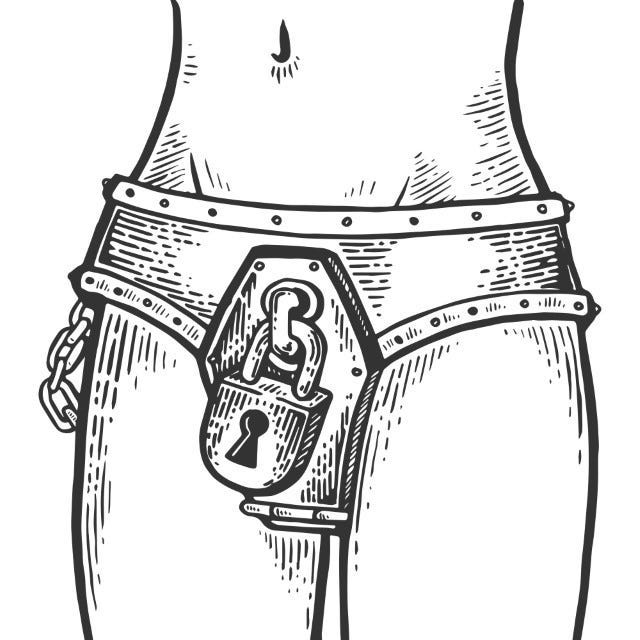
We live in a culture that trains us to treat romantic partners as private property. We speak of my object of affection, fear our partners being stolen, and celebrate a man calling his partner mine as a sign of passion. But when you think about it, the idea that another person belongs to you is disturbing.
Anarchist theory rejects private property and questions why we accept ownership as the natural order of things, whether that means asking who has the right to own water and the commons. Anarchism is also anti-statist as the state is the ultimate hierarchy and therefore RA asks why the state gets to sanction our relationships through marriage and taxation.
Anarchism naturally challenges patriarchy and the sexist hierarchies that have historically treated women as men’s property. Consider the wedding tradition in which a father walks his daughter down the aisle to her new husband, symbolically transferring ownership, while she takes his last name. These traditions are rooted in a history of treating women as objects to be transferred between men.
Anarchism insists on individual autonomy: your body, time, and sexuality belong to you. You are not entitled to someone’s free time, choices, or emotional availability simply because you are dating them. State your core needs and allow the other person to respond to them freely.
Jealousy is a normal human feeling. We understand that feeling jealous of a sibling or neighbour who has something we want does not give us the right to control them or dictate their choices. Yet when it comes to romantic partners, we routinely excuse precisely this kind of control. Anarchism challenges us to question why romantic love is treated as an exception to the autonomy we recognize in everyone else.
People are not objects. Love does not confer ownership.