
Every Relationship Anarchy Book Reviewed: Which Are Worth Reading?

Relationship anarchy started as a game.
In the early 2000s, a group of Swedish anarchists used live action role playing to imagine a world without rulers. What they discovered about power and the hierarchies in our friendships, our families and our beds became one of the boldest ideas in modern intimacy. But somewhere along the way, the English speaking ethical non-monogamy scene turned relationship anarchy into a lifestyle.
I read every relationship anarchy book I could find, alongside decades of anarchist writing on intimacy, so you do not have to. Some are weak sauce.

A few are brilliant. My full reviews will soon follow with recommendations on which are worth your time and which to skip. First, let me tell you the short story of how a radical idea got defanged, because it explains why most relationship anarchist books are so tame, and why you deserve better.
It began with LARPing
Relationship anarchy emerged in Sweden among anarchists who used live action role playing, or LARPing, to imagine and practise a society without rulers and social hierarchies. Play offered a safe space to experiment with a world beyond domination politics, and it exposed just how deeply hierarchical thinking structures the world we inhabit.
What they noticed was revealing. Friendship was treated as the poor cousin of romance. Anarchist circles reproduced the sexism they claimed to oppose. And hierarchical polyamory, with its primary partners and veto powers, looked like a miniature state governed from the bedroom. Abolish the boss but crown the spouse, and what power structure have you actually abolished?
The anarchist LARPers wanted their community to have an anarchist praxis with integrity. Not just the abolition of rulers at the top of society while domination continued unchecked in our homes, families, friendships and beds. If we are serious about abolishing hierarchy, our most intimate relationships cannot be exempt from the struggle.
From Swedish workshops to the whole internet
Relationship anarchist ideas were further developed in anarchist workshops in Sweden and then spread onto message boards across Europe. Game designer Andie Nordgren, one of the original cohort, wrote an accessible form in the Relationship Anarchy Manifesto, first published in Swedish in 2006 as Relationsanarki i 8 punkter. She later translated and adapted it into English as The Short Instructional Manifesto for Relationship Anarchy, which led to relationship anarchy becoming a global trending idea.
But then in 2014 Gamergate happened, a mass harassment campaign against women in gaming, especially those who challenged sexism or pushed for representation. Abuse, threats and doxxing made public visibility dangerous. So anarchist gamers chose to give no more interviews about relationship anarchy.
How a radical idea got coopted
In my opinion, this is where the Relationship Anarchy tragedy began. When the original thinkers could not safely discuss anarchist relationship practices in public, the conversation passed to everyone else, including people with no anarchist grounding at all. Especially in the English speaking world, relationship anarchy became a personal lifestyle rather than part of the anarchist revolution. A radical critique of domination was gradually erased by the very culture it was meant to challenge.
This is how radical ideas get domesticated. The question shifts from how do we dismantle hierarchy together to how do I live freely within the world as it is? A critique of domination becomes a matter of personal preference.
Oh, Americans and their sacred individual freedom. God forbid we question someone’s right to dominate others.
That is why you’ll often hear that relationship anarchy means having no labels, doing whatever you want, or negotiating commitments outside conventional scripts. But none of these things is inherently anarchist. Rejecting labels does not abolish domination. Rewriting commitments does not make you free of power. And choosing your own relationship structure does not automatically challenge the social structures that make some relationships more privileged than others.
Personal freedom without a critique of power is not the same as liberation.
When relationship anarchy is reduced to a more conscious form of ethical non-monogamy, we lose sight of the much bigger questions. What would it mean to abolish the family as a patriarchal institution of ownership and control? What would child liberation look like? How do we dismantle the hierarchies that govern our relationships with one another and the living world?
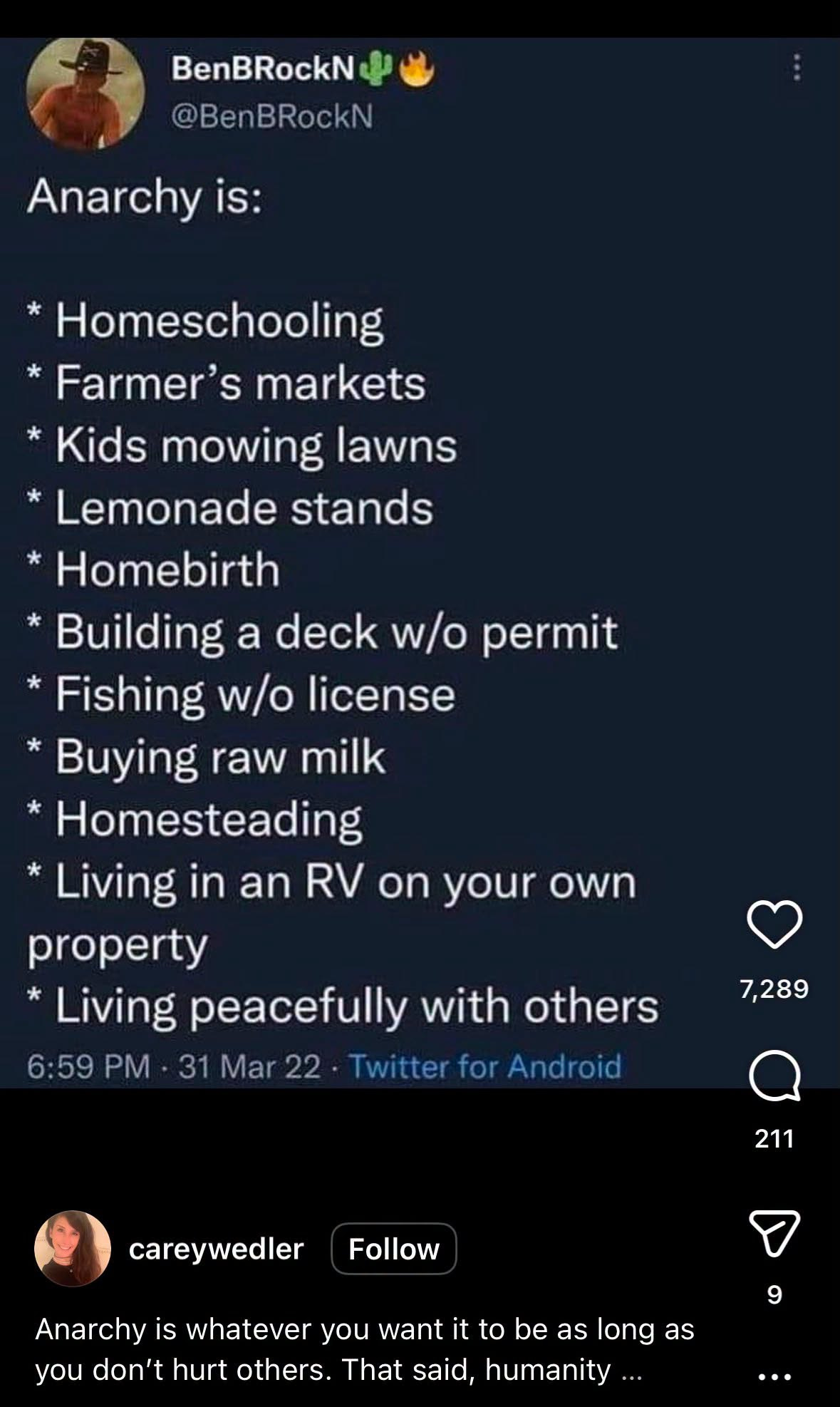
Take this very American tweet that describes anarchy as farmers’ markets and *private property as an example of how American individualism and consumerism defangs anarchism. *Proudhon, the godfather of anarchism famously challenged the very idea of private property.
Why Are Relationship Anarchy Texts So Sparce on Radicalism?
Geography helps explain some of this. North America, the heart of the imperial order and global capitalism, has a long history of neutralizing radical leftist ideas, stripping them of their political force and selling people back a depoliticized version. State repression of radical movements, including decades of government campaigns against leftist organizers, has helped marginalize anarchism as a political practice in North America.

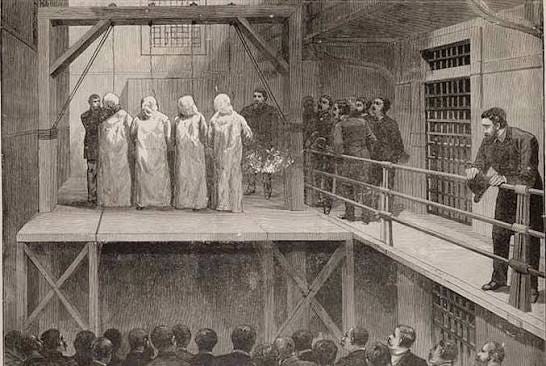
Today, anarchists and other anti-authoritarian radicals are increasingly labeled in America domestic extremists, while the label terrorist is used to delegitimize movements such as antifa.
Relationship anarchy is particularly vulnerable to this process because its language of personal freedom fits comfortably within a capitalist culture that encourages us to understand liberation as an individual project.
We can be sold the freedom to choose our relationships without ever being asked to question the systems of power shaping those choices. We can challenge the rules of dating while leaving the institution of the family, private property, patriarchy and the state largely untouched.
In other parts of the world, resistance to domination has developed through different histories, struggles and traditions. I come from Kenya, where movements for decolonization and the recovery of Indigenous practices intersect with anarchist critiques of hierarchy and domination. These connections matter because they remind us that the struggle against imposed authority is not exclusive to European political theory.

But also relationship anarchy predates its coining. Gustav Landauer argued that the state is not merely an institution standing above us, but a relationship between people, a way of behaving toward one another. We challenge it by creating different relationships. This insight reaches far beyond romantic partnerships. Every friendship, partnership and community we belong to can become a place to practise freedom, mutual responsibility and resistance to domination.
So neither anarchism nor the ideas we now call relationship anarchy are thus new. The names may be relatively recent in this context, but humans have long imagined and practised ways of relating beyond the dominant institutions and hierarchies of their time.
Much of that rich history deserves to return to the conversation, not as an interesting footnote to contemporary dating practices, but as part of the radical project of building a world without domination.
How I’ll be reviewing these books
I will review contemporary relationship anarchy books alongside works on anarchism, intimacy and relationships from earlier generations, using three questions:
Anarchist integrity: How closely do these books align with core anarchist principles, especially the abolition of hierarchy and opposition to domination?
Real anti-amatonormativity: Do these books truly challenge the assumption that romance outranks every other bond, or do they focus on ethical non monogamy while neglecting how to create meaningful relationships beyond romance?
Understanding of polyamory: So many of these books focus on polyamory, so how well do they actually engage with it? As a polyamory educator and peer supporter, I can’t help but review the realities of practising polyamory with a fine toothcomb.
The point of being a honest critic is because I believe anarchist ideas on relationships have so much potential to transform the world.
We deserve a relationship anarchy that challenges more than the rules of dating. We deserve ideas that help us see how domination shows up in everyday life, how we can unlearn it together, and how our relationships can become part of creating a freer world.