
They Didn’t Teach You About Colonialism Because It Shapes Everything

Colonialism is not an aberration that ended with the independence hurrahs between 1945 and 1975. The actual last country of that decolonization era, Angola, in fact celebrated its independence from Portugal yesterday, November 11. But you cannot understand how 500 years of colonial power structures remained largely intact and merely morphed, if your high school failed to teach you what colonialism actually was. We were taught at best a few dates, a company name or two, and a lionizing story about how the West benevolently ended slavery and colonialism. Meanwhile the systems around us, from borders and economies to parenting, your diet, and technofeudalism, all perpetuate the colonial legacy in various ways.
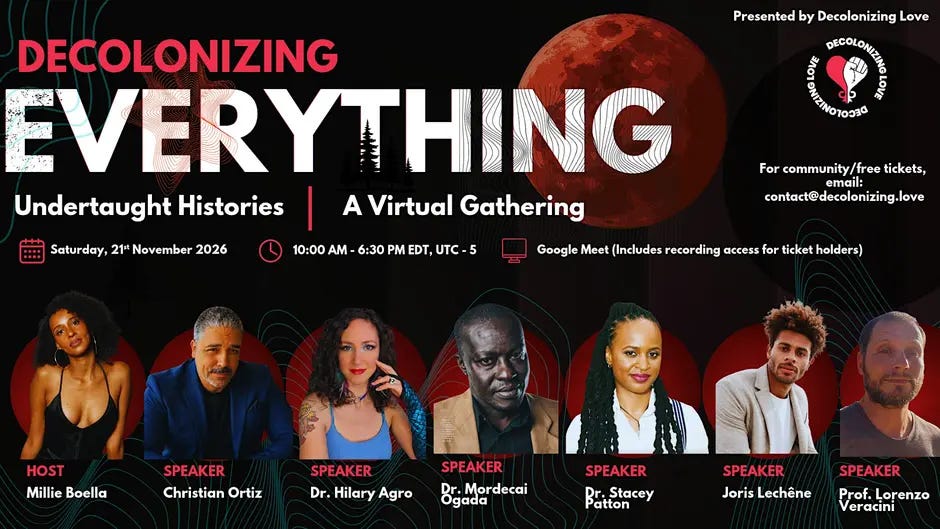
On Saturday, November 21, from 10 AM to 6:30 PM EST (UTC−5), Decolonizing Everything brings six experts together online to fill the education gap in layman terms. It is open to anyone, wherever you live. Full day tickets all include a recording, so unlike high school, you can miss attendance and we will not penalize you.
The decolonizing conferences of the early 20th century brought thinkers like Frantz Fanon, Aimé Césaire, Kwame Ture, and Kwame Nkrumah together to theorize on how to break free from colonial rule. Based on the idea of those radical gatherings, I wanted to recreate that energy but make it accessible to folks who are not academics. We brought together some of the greatest minds studying colonialism and some of the most amazing decolonial thinkers in the world. They usually teach this in academia or for nonprofits, but they are here to make this accessible to the average person and to touch on much more than just theory.
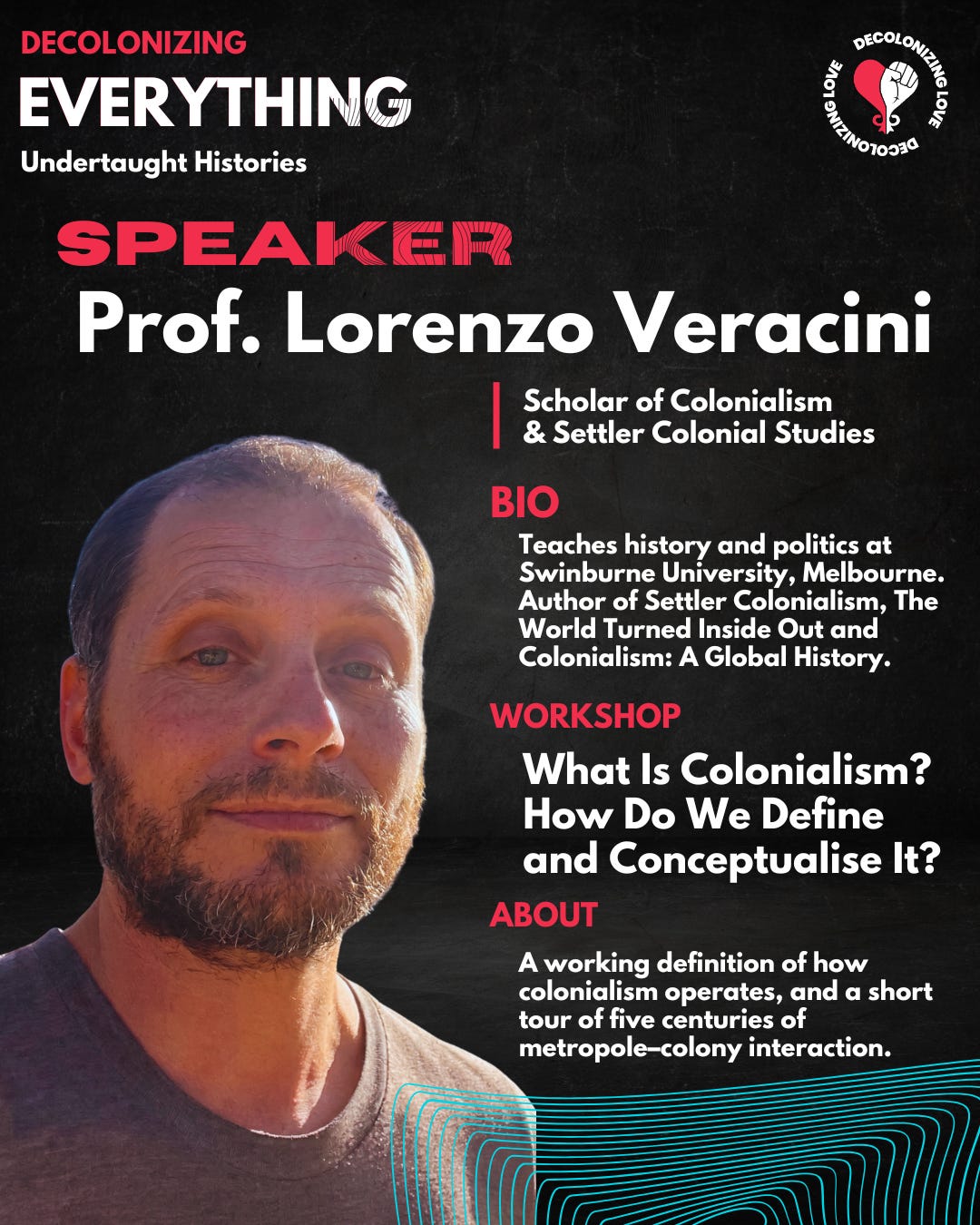
Professor Lorenzo Veracini opens the day. His book, Colonialism: A Global History (Routledge, 2022), is the only book I could find on global colonialism on the market. This is shocking in 2026, but also not surprising when you think about how most school books are published by companies like McGraw Hill, which have ties to legacy structures like Ghislaine Maxwell’s father. They are designed not to empower and inform, but to act as propaganda.
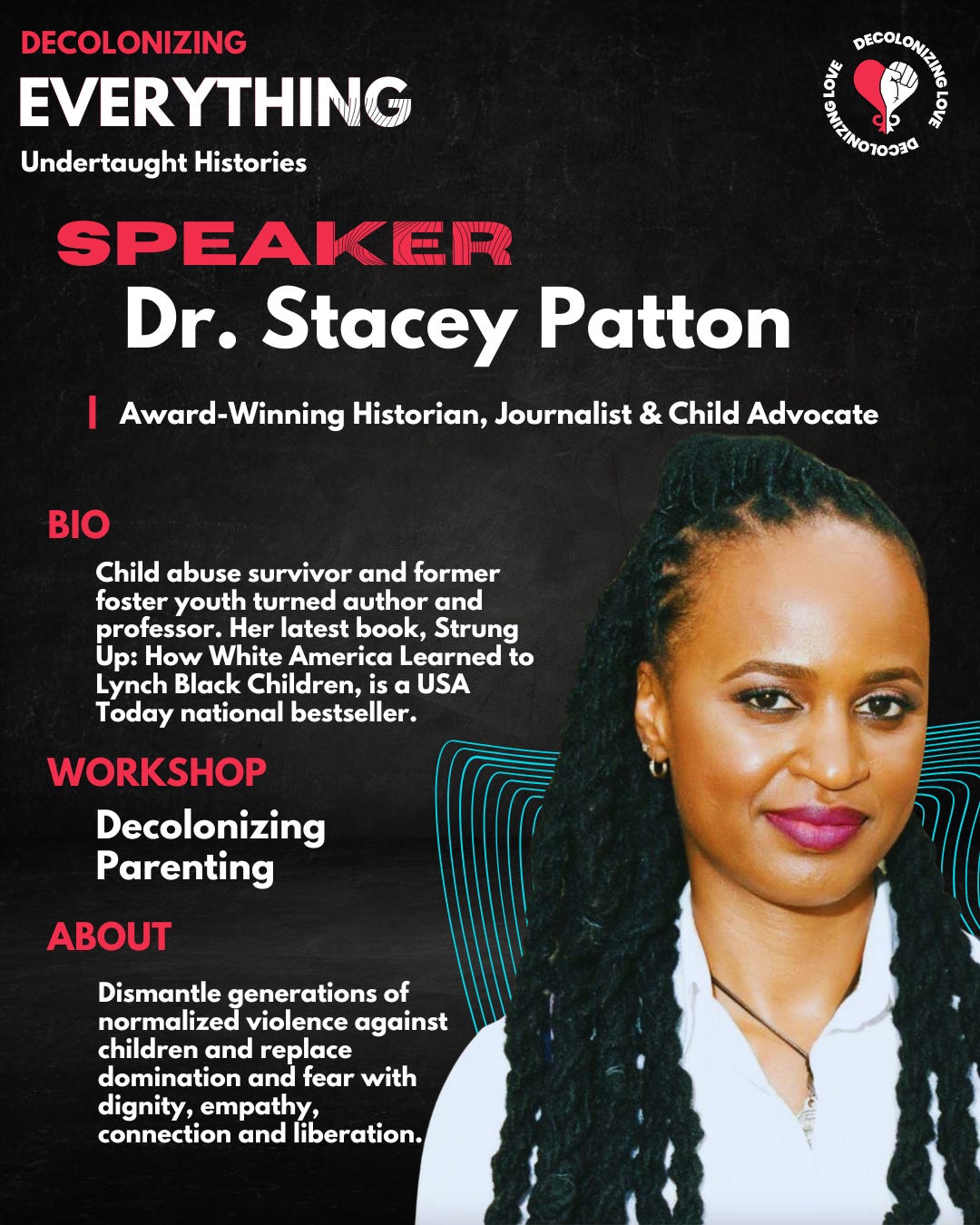
I am also very honored to host , who will speak on decolonizing parenting. Her new book, Strung Up: How White America Learned to Lynch Black Children shows that the lynching of Black children, from adolescents to infants, was a deliberate and normalized part of white supremacy, and that targeting children was one of the ways it was passed on. She traces this back to European traditions of public execution and cruelty toward the young, and turns the focus onto the white families and communities who made it possible. It is a hard subject, which is exactly why her talk matters. It asks what raising children looks like when fear and domination give way to empathy, connection, and liberation.
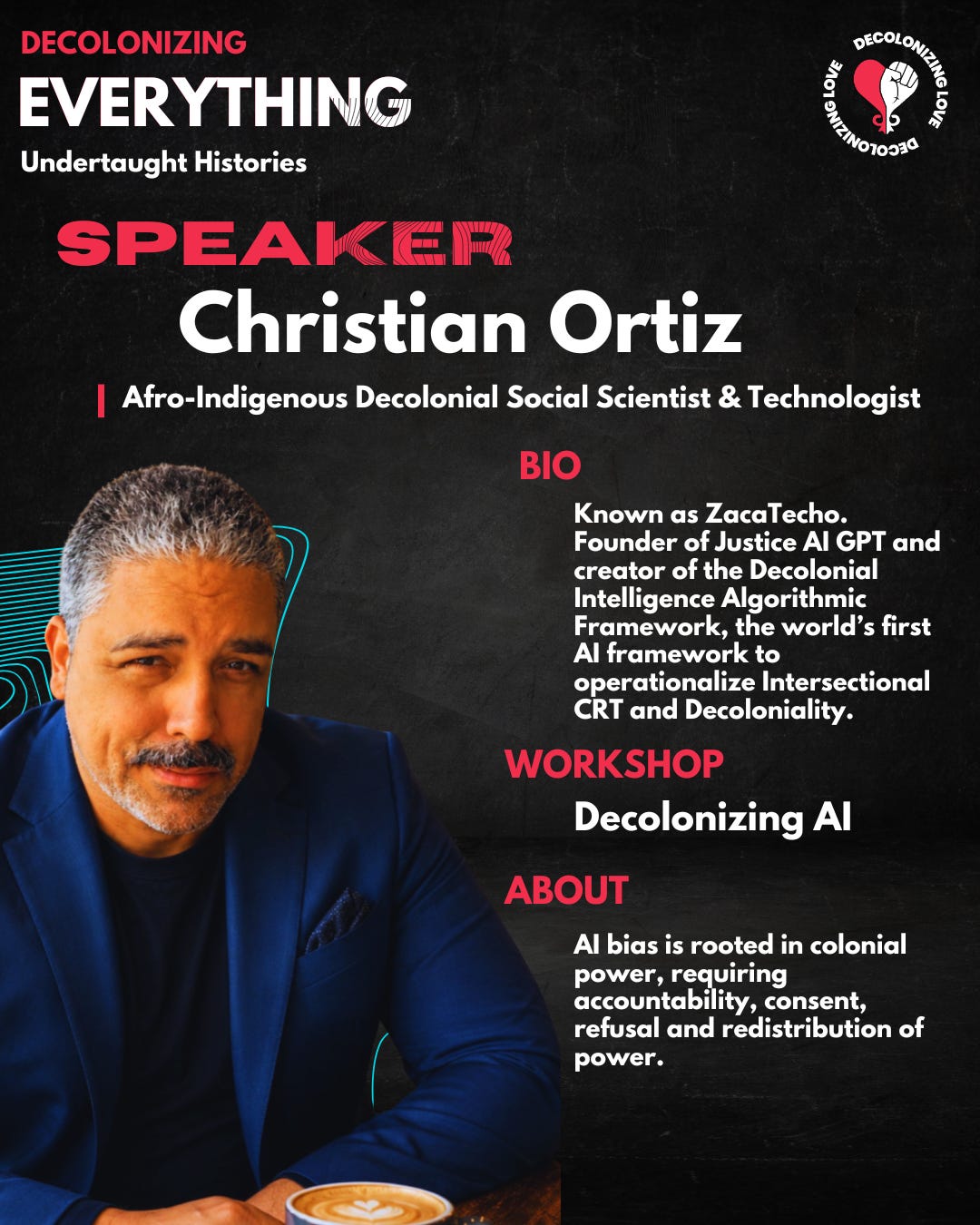
We are in the AI age, so we must talk about this new weapon. Colonialism was won by Europeans due to new technology the world had not seen before, and AI is particularly colonial as it is based entirely on extracting the entirety of human knowledge without our consent. Christian Ortiz Just finished his dissertation, and his talk, Decolonizing AI, looks at where artificial intelligence meets colonial power and how we can imagine better futures for these tools. Colonialism is being rewritten into the technology we use every day, and he asks who it truly serves.
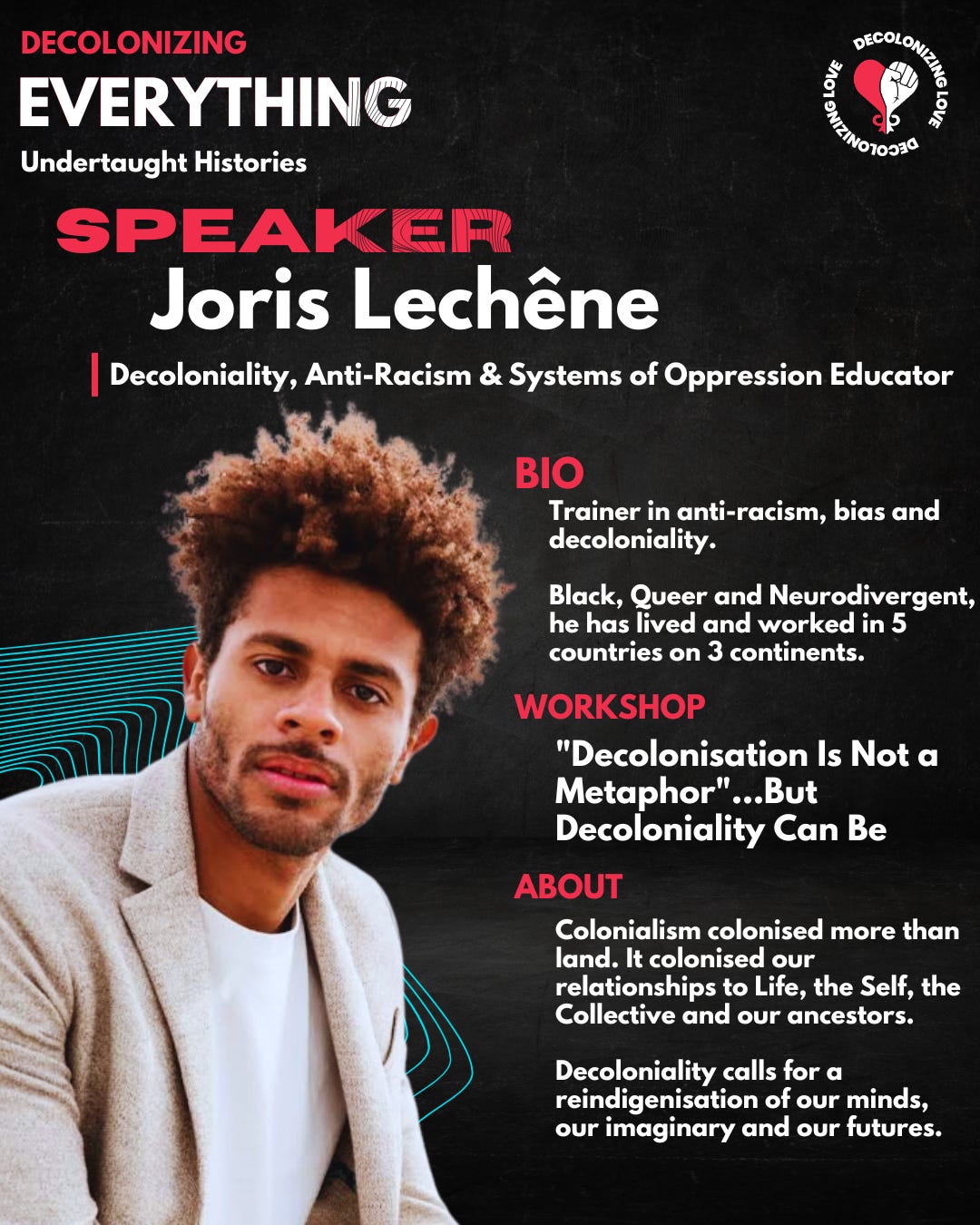
Joris Lechene takes on a distinction that gets lost in a lot of well meaning talk. Decolonization is not a metaphor. It means the real return of Indigenous territory and sovereignty, not a buzzword for self improvement. But decoloniality, the ongoing work of unlearning colonial ways of seeing and living, still matters for everyone, including people who live nowhere near a former colony. Colonizers did not just conquer people and take over land; they were very much concerned with colonizing the mind, making decolonizing the mind also an essential part of decolonization.
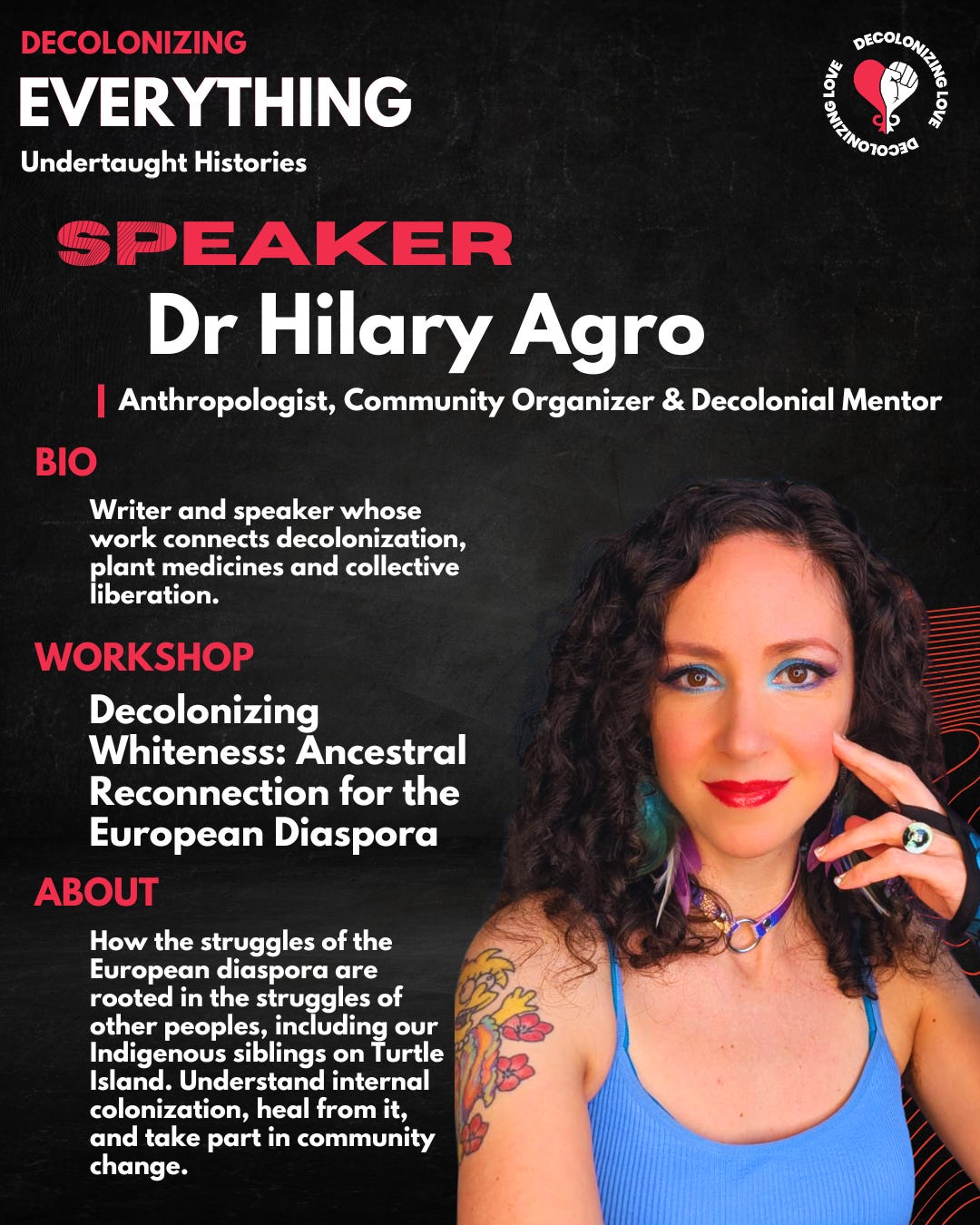
Dr. Hilary Agro speaks directly to white audiences with a message that you can decolonize yourself too. A thousand years of rule by the Roman Church cut European peoples off from their own Indigenous roots, and whiteness took the place of what was lost. Her talk, Decolonizing Whiteness: Ancestral Reconnection for the European Diaspora, is about untethering from whiteness and finding yourself again.
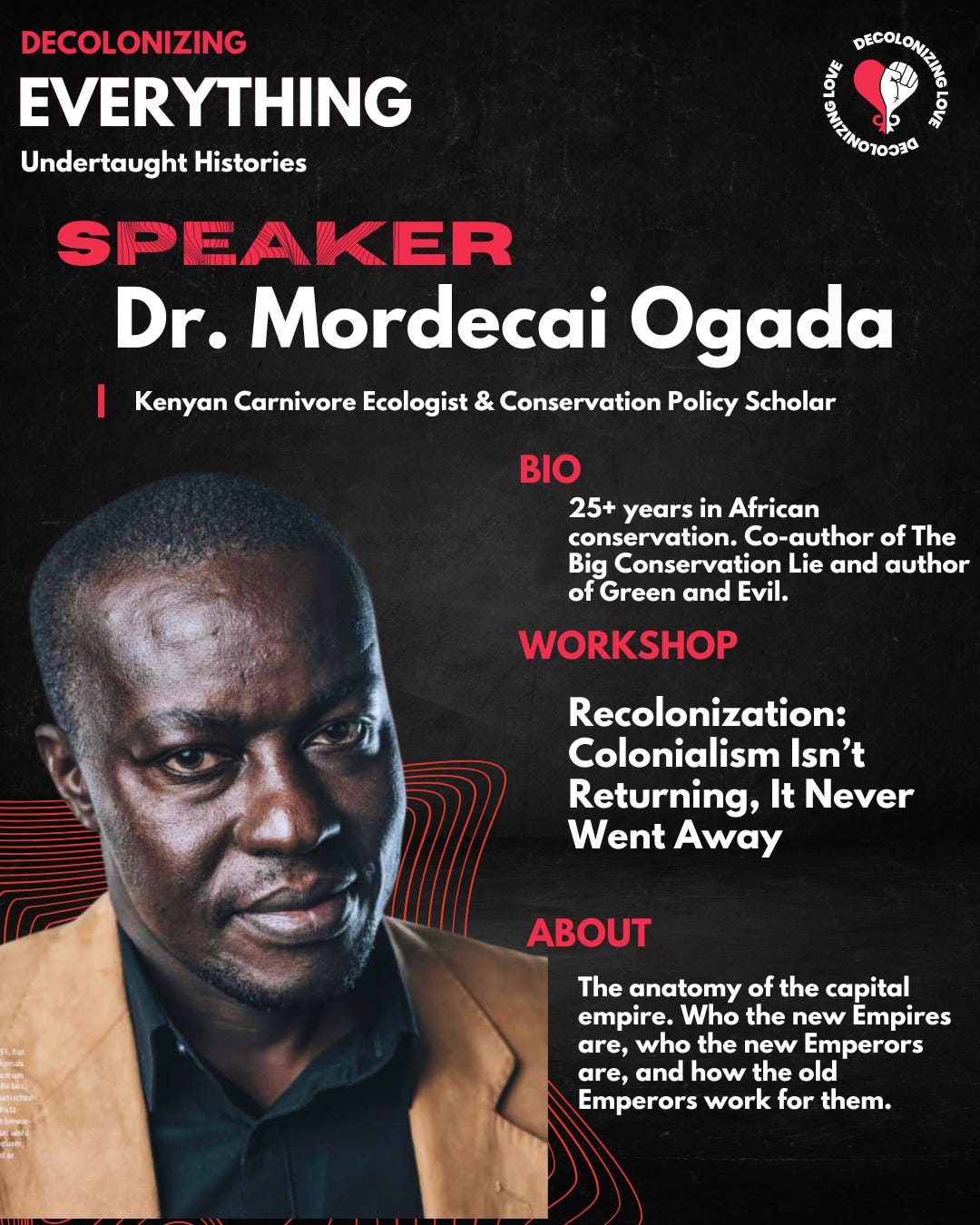
Dr. Mordecai Ogada will discuss how colonialism is not returning because it never actually went away. Empire is sneaky. It came back first through neocolonialism, and now through recolonization. We can see it in the Trump administration’s moves on Venezuela, Cuba, Canada, and Denmark’s Arctic territory, as well as in the Greater Israel project. It goes even further than that. How many people know Israel recently bought land in Kenya’s Rift Valley for Israeli youth, on land that mysteriously had a private dam burst a few years ago, killing many and clearing the land of Indigenous Africans?
There were many various colonizations, but European colonization spread across the whole world and has affected every single person. Just like colonialism did not end in 1975, the story is still being written, and you can always take your power back.
It is never too late to learn more about decolonization and how you can decolonize yourself. Whatever your age or race, there is something here to surprise and empower anyone.
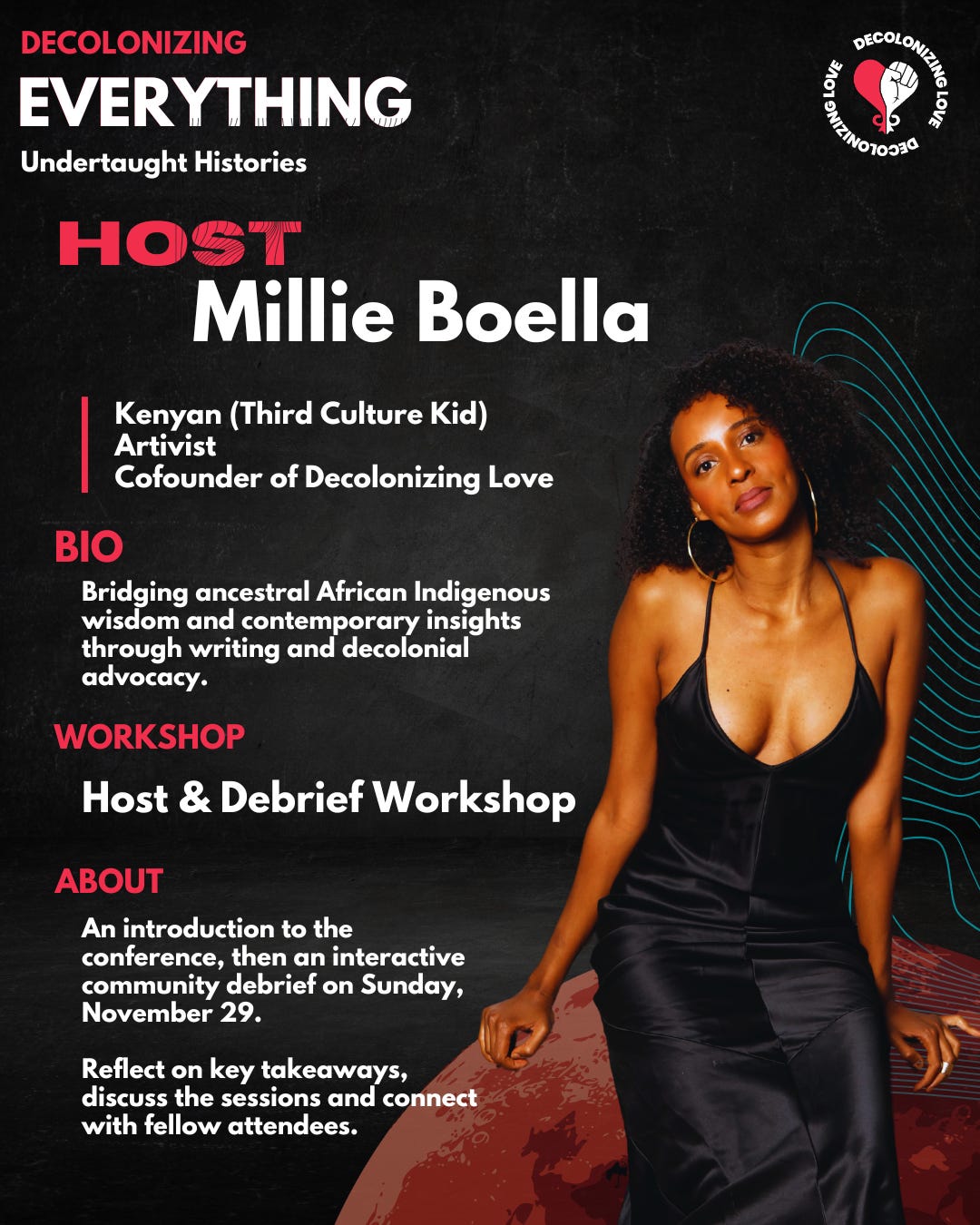
Tickets start at $43.45, with community priced tickets and free tickets for Indigenous folks. Full Conference Solidarity ticket holders also get a one hour debrief by me and a group session on Sunday, November 29 at 12 PM EST (UTC−5).
If you have ever felt that your education left something out, well you now have a day where you can rectify it. Get your ticket here:
As a thank you for your valued support Substack paid subscribers get 20% off: