
Ways Indigenous People Relate Differently from Western Norms

Many Indigenous societies offer radically different, and often healthier, more fluid models of relationships than the Western ideal of the monogamous nuclear family. In the West, monogamous marriage has historically functioned less as a romantic institution and more as a mechanism of patriarchal control over women’s bodies to secure male lines of inheritance. As love and self-actualization become more central to adult life beginning in 19th century, those norms increasingly frayed. Looking to pre-colonial and Indigenous kinship systems provides both proof that other ways of living are possible and concrete models to draw from.
Below are several Indigenous practices that contrast sharply with Western assumptions about marriage, parenting, gender, and sexuality.
Marriage isn’t universal
Among the Hadza of Tanzania, a hunter-gatherer society, there is no formal institution of marriage and no word equivalent to husband or wife. The closest term translates roughly as “the person I am currently with.” Children commonly grow up with half-siblings from different fathers and are raised by dozens of adults who help feed and protect every child in their community. Anthropologist Sarah Hrdy describes this as cooperative breeding: parents never parent alone.
Similarly, among the Kung San (Ju/’hoansi) of the Kalahari in Southern Africa marriages are flexible, often serial, and embedded in wide kin networks that share childcare and resources. The San are widely considered to be among the first humans in the world, making their social structures a key example of how humanity actually lived for most of human history. Divorce is common and non-stigmatized; children move easily between households and are cared for by many adults beyond their biological parents.
These societies show that stable, loving child-rearing does not require an exclusive, nuclear family.
Through mother’s who practice free love
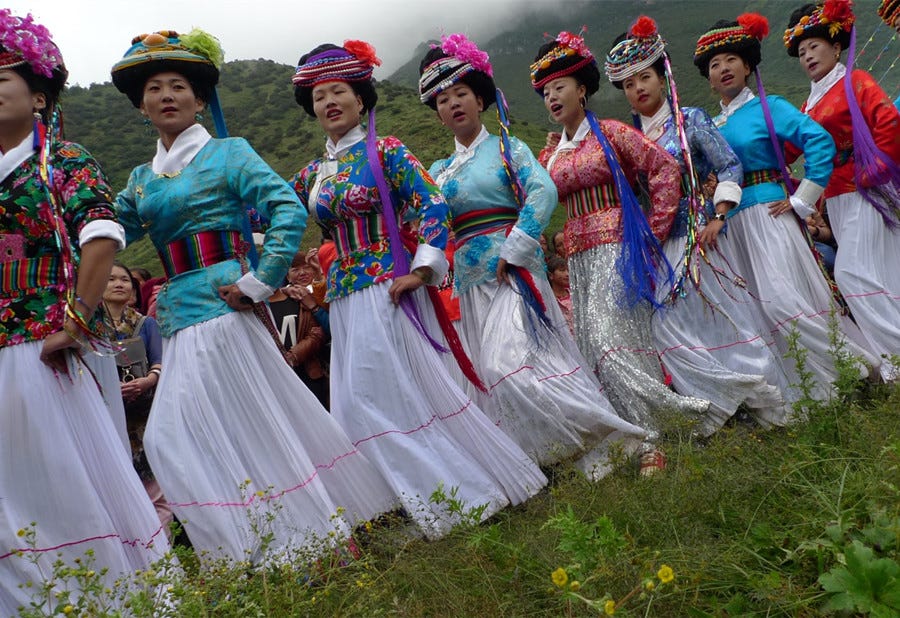
The Mosuo (also spelled Na) of southwest China practice what outsiders call “walking marriages” (zouhun in Mandarin; sese in Mosuo). In this system:
Partners do not cohabit; each lives in their maternal household.
Men visit women at night and return home at dawn. It’s women that choose their lovers and invite them over.
Children are raised in the mother’s household, supported by her brothers and extended kin.
There is no formal marriage contract, and relationships can be long-term or short-term.
Because property and lineage run through women, and because maternal uncles, not biological fathers, play the primary male caregiving role, paternity certainty is culturally unimportant. This means there is no culture of controlling women’s sexuality.
This culture correlates with low levels of domestic violence and greater bodily autonomy for women. There are also ethnographic observations that Mosuo women report fewer severe menopausal symptoms and greater comfort with bodily changes than women in the more patriarchal Han Chinese.
Marrying Yourself
In Kikuyu (Gĩkũyũ) culture in central Kenya, women can undergo a ritual called Kamweretho (sometimes referenced alongside kwigura, “buying oneself”). Traditionally, this was a ceremony for post-menopausal women who had demonstrated they could care for themselves and their dependents. By marrying themselves women:
Gain social recognition as heads of household.
Secure rights to receive bridewealth (dowry) when their children marry.
Assert autonomy outside patrilineal control.
Two of my aunts have had Kamweretho ceremonies with weddings, bridesmaids, and officiant. While historically tied to menopause, the ritual is now being adopted by younger unmarried women as a feminist and economic strategy. It’s a way to show economic independence and power.
I plan to hold my own Kamweretho, even though I’m in a long-term polyamorous relationship. For the past 16 years, I’ve shared my life with my anchor partner, Nick, while also building relationships that don’t revolve around marriage or traditional couplehood.
Kamweretho makes space for partners and lovers, while centering a woman’s relationship with herself. That’s what draws me to it. As a solo-polyamorous person its core message resonates with me:
“I will never belong to a man. I belong deeply to myself.”
Partible Paternity: Multiple Fathers
In many Indigenous societies of lowland South America, including the Yanomami, Barí, Canela, Kulina, Aché, and others, people hold beliefs in partible paternity. According to this belief:
A fetus is formed gradually from accumulated semen.
All men who have sex with a woman during the relevant period contribute to the child’s formation.
These men are all considered fathers to varying degrees, not just the biological father.
Among the Barí of Venezuela and Colombia, long-term demographic work shows that children recognized as having two fathers are significantly more likely to survive to age 15 than those with only one. Multiple fathers mean more hunters, more protectors, and more resource providers.
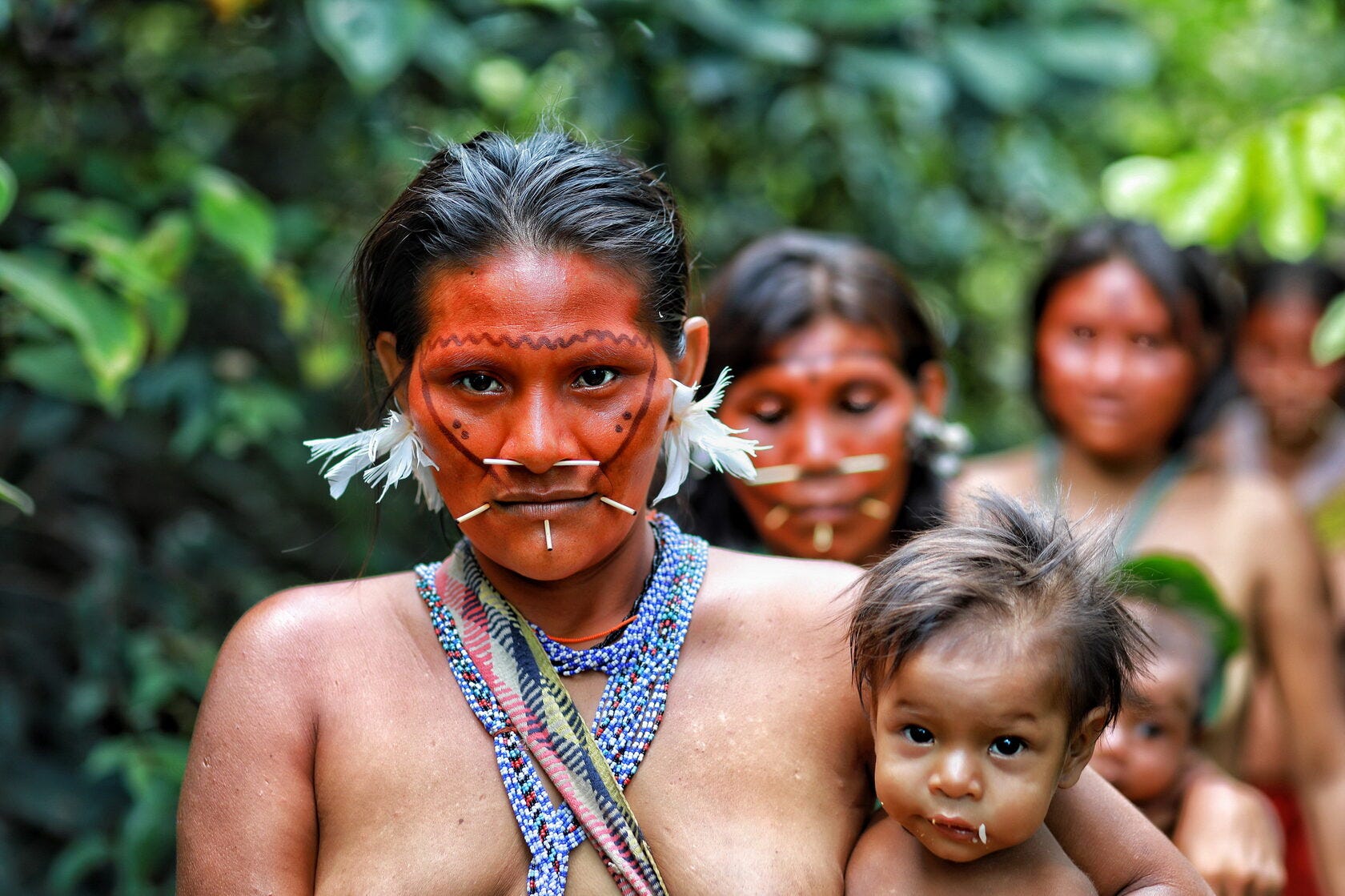
This is not promiscuity in a moralized Western sense; it is a kinship technology that distributes paternal investment and reduces the stakes of exclusive, monogamous pair-bonding.
Woman–Woman Marriage and Female Husbands
Across many Bantu-speaking societies, including the Kikuyu, Kalenjin (especially the Nandi), and various West African people, there exist institutions of woman–woman marriage and female husbands.
Typical patterns include:
A woman (often older, wealthy, or without sons) marries another woman.
The wife may have male partners or boyfriends; children she bears are socially and legally the offspring of the female husband.
These children inherit the female husband’s name and property.
In some cases, a female husband may also be married to a man, creating complex household structures where she controls land, livestock, and lineage.
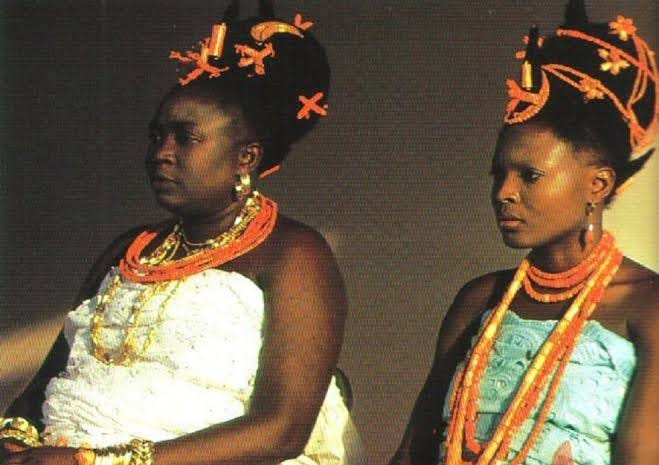
You can think of this as a form of social surrogacy that honors the gestational mother while ensuring the child is embedded in a secure lineage. Unlike Western commercial surrogacy, where the gestational carrier typically relinquishes all claims, these African traditions often maintain lifelong ties and support for the birth mother, recognizing the ongoing significance of the womb connection.
No Sex Work
In the vast majority of pre-colonial societies, which were largely organized as egalitarian kinship networks rather than complex hierarchies, kingdoms, or empires, institutionalized prostitution did not exist.
The absence of sex work in these cultures stems from the fact that prostitution inherently necessitates patriarchy. For sex work to function as an institution, a society must first establish women’s bodies as commodified objects designed for male consumption and pleasure. In egalitarian societies where resources were communally shared, women held economic autonomy, and kinship networks secured survival, the transactional exchange of sex for basic needs had no structural foundation.
Prostitution as a full-time, cash-based labor category only emerged and expanded dramatically when colonial powers imposed patriarchal capitalism. To enforce this new hierarchy, colonial authorities frequently:
Dismantled egalitarian kinship structures and criminalized Indigenous sexual autonomy.
Economically marginalized women by shifting land, wealth, and resource control exclusively to men.
Established regulated brothels and kidnapped or coerced women into sex work to serve European soldiers, miners, and administrators.
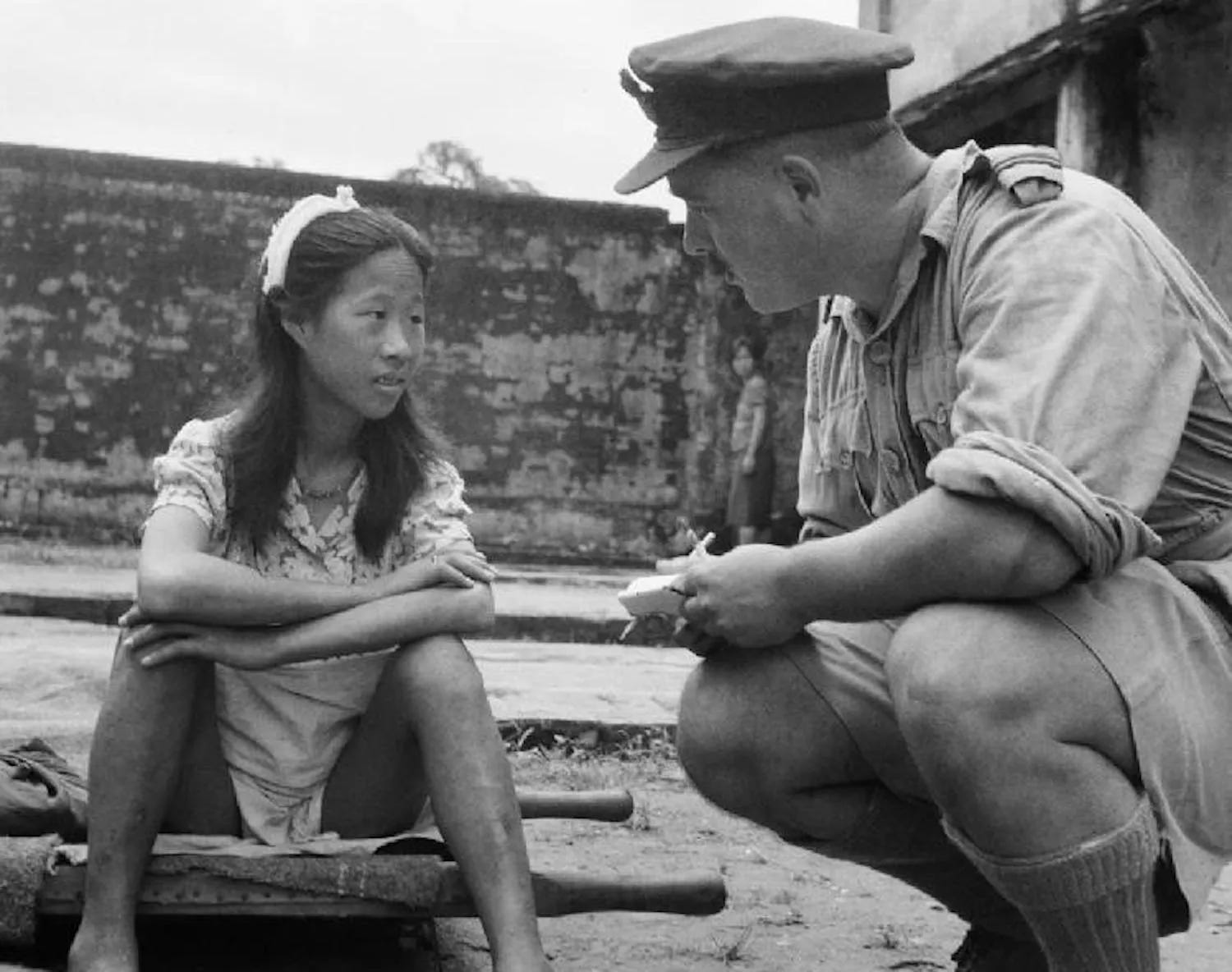
Commodified sex trade is not a human universal. It is a deeply colonial and patriarchal formation that requires the systemic subjugation, economic vulnerability, and objectification of women to exist.
Child Autonomy
In Western and modern cultures children belong to their biological parents. But in many Indigenous cultures, children belong to themselves and their parents are optional guides.
Among many Inuit communities, child-rearing emphasizes:
Minimal punishment and coercion.
Learning through observation, storytelling, and natural consequences.
High degrees of autonomy as children grow.
Similarly, in many Australian Aboriginal societies:
Children are raised by extended kin networks, not just biological parents.
Child-rearing is notably permissive: authoritarian discipline is rare; children can make many of their own choices.
It is socially acceptable for children to spend long periods living with grandparents, aunts, uncles, or other community members if they prefer.
Children are not routinely stopped from exploring potentially dangerous things (like fire); instead, they are closely supervised when very young and then allowed to learn through controlled risk. This fosters strong self-knowledge and confidence.
This contrasts with agricultural and industrial societies where strict obedience is often enforced to protect property, crops, and labor routines. The result in many Indigenous contexts is children with high self-esteem, strong social skills, and a clear sense of belonging to a wider community.
Men Who Nurture
Deep in the Congo rainforest, the Aka (a Bayaka/BaYaka forager group) are famous among anthropologists for their extraordinarily involved fathers.
Aka fathers spend nearly half their day in direct physical contact with their infants carrying, holding, singing, co-sleeping
When a mother is unavailable and a baby cries, it is not unusual for the father to offer his own nipple for comfort, even though he does not lactate.
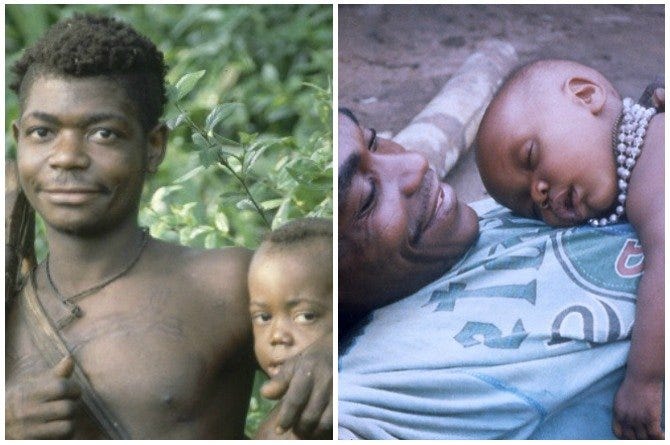
Aka fathers with their babies.
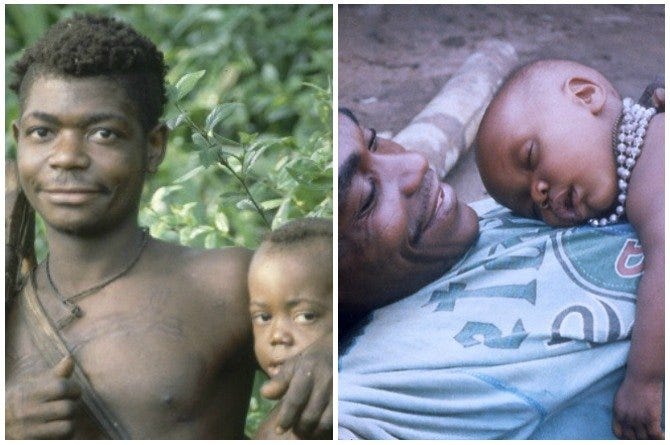
This is not just cultural; it is biological. When men become primary caregivers:
Testosterone can drop by up to 30%.
Oxytocin and dopamine rise, supporting bonding and reward-based caregiving.
Prolactin, a hormone linked to parental investment, also increases.
Physical touch, holding, skin-to-skin contact, infant massage, amplifies these hormonal shifts and strengthens attachment.
Yet in many Western contexts, mothers are still treated as the natural primary parents, a bias reflected in custody norms and parental leave policies. The image of the distant, disciplinarian father is historically recent, tied to industrialization and the separation of wage labor from home life. Among the Aka, involved fatherhood is not radical; it is close to the human baseline.
Gender Egalitarianism as Active Practice
Egalitarian societies do not remain non-hierarchical by accident; they maintain equality through deliberate leveling mechanisms.
Among the Aka, one example is a ritualized tug-of-war between men and women:
The game starts with all men on one side, all women on the other.
As soon as one side begins to win, a participant from the winning side switches to the losing side, adopting an exaggerated voice to parody the other gender.
As the advantage shifts, more people swap sides and mock both positions, until everyone is laughing and no side wins.
The goal isn't competition, but a social lesson: one group’s domination destabilizes the entire community. The ritual diffuses gender tensions and reinforces that we must rely on each other to thrive as a whole.
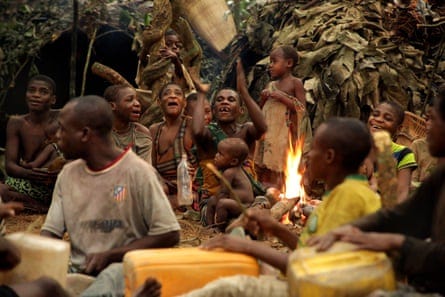
These practices show that preventing patriarchy requires ongoing, joyful work to dismantle domination whenever it begins to appear.
Takeaways for Non-Indigenous People
Taken together, these examples undermine the Western story that monogamous, nuclear, patriarchal family forms are the apex of human social evolution. Instead, they reveal:
Multiple valid models of partnership and parenting.
Kinship systems that distribute care and resources broadly.
Rituals and norms designed to keep power horizontal and gender relations fluid.
Biological capacities in all humans, men and women, for deep caregiving and non-possessive relating.
Indigenous kinship systems prove that alternative ways of living are not just possible, but highly relevant today. From my home in downtown Toronto, I practice a polyamorous life inspired by the non-monogamous traditions of my Maasai culture. While anchored by a long-term partner, I am also planning a Kamweretho ceremony, a powerful tradition from my Kikuyu tribe, to formally center my autonomy. It is a synthesis of modern life and Indigenous fluidity: drawing on my own heritage to craft a way of loving that rejects patriarchal ownership and embraces community and care. This wisdom isn't gatekept by lineage; it is part of the broader human story.
Wherever you are, you have the power to let these models inspire you to build a life on your own terms.
Share this article so other people can also know that different worlds are possible.