
What Has Polyamory Got to Do with Decolonization?

We are in a loneliness epidemic and monogamy due to colonization is one of the culprits.
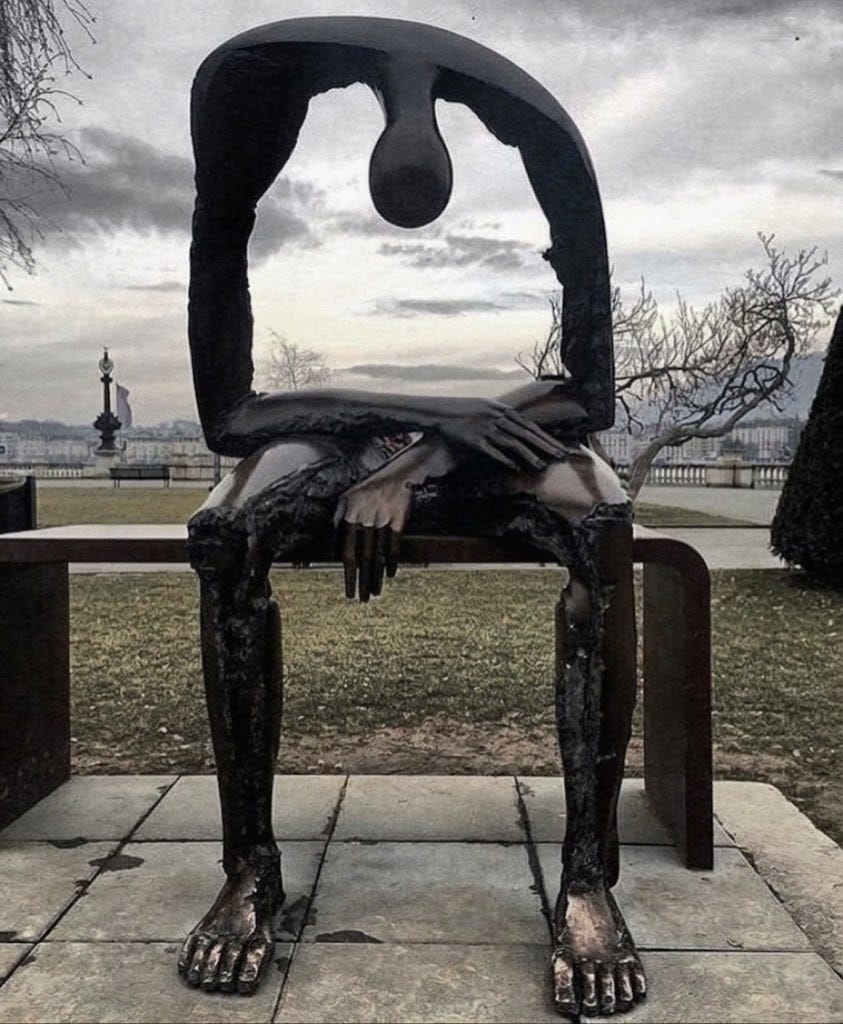
Monogamy isn’t normal. Yeah I said it. For all its contemporary sanctity, lifelong monogamy is an evolutionary rarity and an anthropological latecomer. We have been propagandized for the past century or so about romantic monogamous love, and have had our minds violently colonized for the past 500 years (longer if you are European due to the Church). We are told that we must find our other half, ride the relationship escalator into exclusive marriage, and lock ourselves into a rigid, lifelong couple. But humans are inherently, stubbornly, magnificently sexually diverse. When we try to force that sprawling diversity into a single, mass-produced mold, we inevitably fracture. When you manufacture scarcity in a society, loneliness as an epidemic is the inevitable outcome.
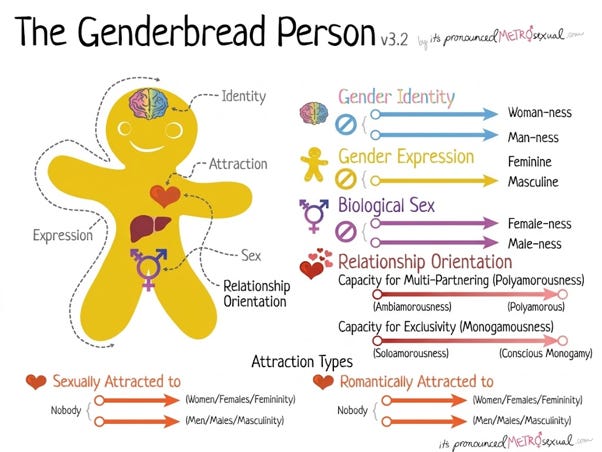
I discuss polyamory as one way to decolonize, not because I think everyone should be polyamorous, but because polyamory disrupts the colonial propaganda that there is only one way to love and that love should be confined to as little as possible.
Colonial capitalism depends on the Protestant work ethic, which reduces human life to disciplined labor in service of the machine. Decolonization counters that reduction by insisting that life is about self-actualization, the freedom to live fluidly and define connection on one’s own terms. That freedom dismantles compulsory monogamy. You have an inherent right to define love on your own terms. Whether that means conscious monogamy, polyamory, ambiamory or soloamory, marriage or no partnership at all, the choice should be yours, not the government's, your parents', Disney's or your peers'.
How did we become monogamous?
For most of human history, social structures were vastly more communal and fluid. Sexual relations reflected that and marriage wasn’t even a thing. We can look at contemporary hunter gatherers to understand how we lived for the longest time. Among the Hadza of Tanzania there is no formal institution of marriage and no direct translation for husband or wife.
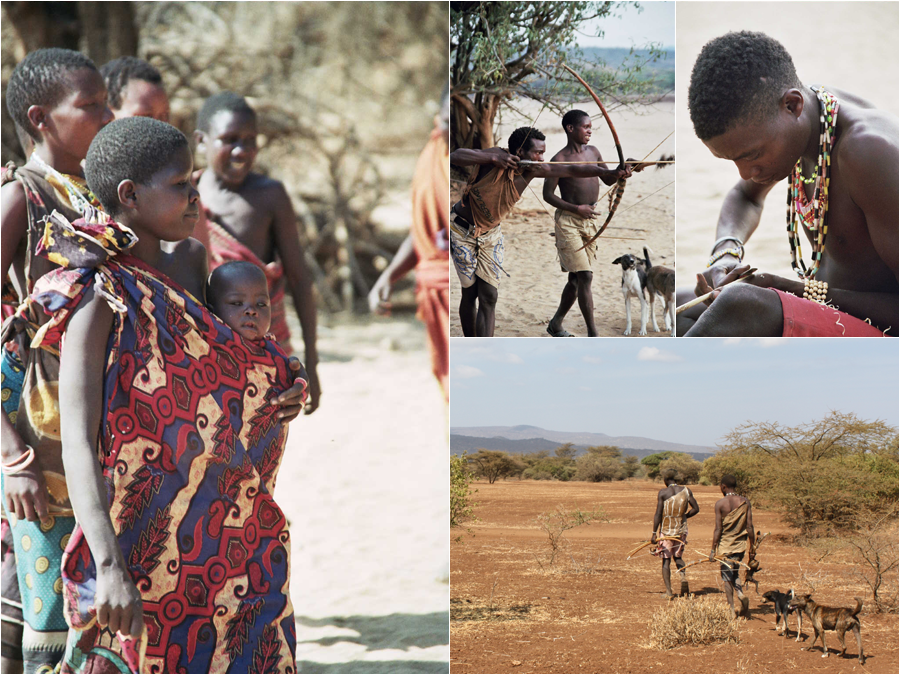
The closest equivalent simply means “the person I am currently with”. Children are raised by dozens of adults in a system of cooperative breeding, demonstrating that stable, loving environments do not require an exclusive nuclear family.
The shift away from these communal networks was driven by the agricultural revolution and the rise of patriarchy. As societies transitioned from nomadic foraging to settled farming, the accumulation of property and surplus created a sudden, desperate need to establish inheritance rights. To ensure that land and wealth were passed down within a specific family unit, patriarchal societies began to prioritize male lineage. This required absolute control over women’s sexuality.
Monogamy originated as a technology of control, evolving into a practice where individuals of any gender now commodify their partners, treating them as possessions to be owned and jealously hoarded.
This economic shift was reinforced by religious and imperial power. Early fertility religions that celebrated the interconnectedness of life were replaced by patriarchal structures and male-dominated narratives.
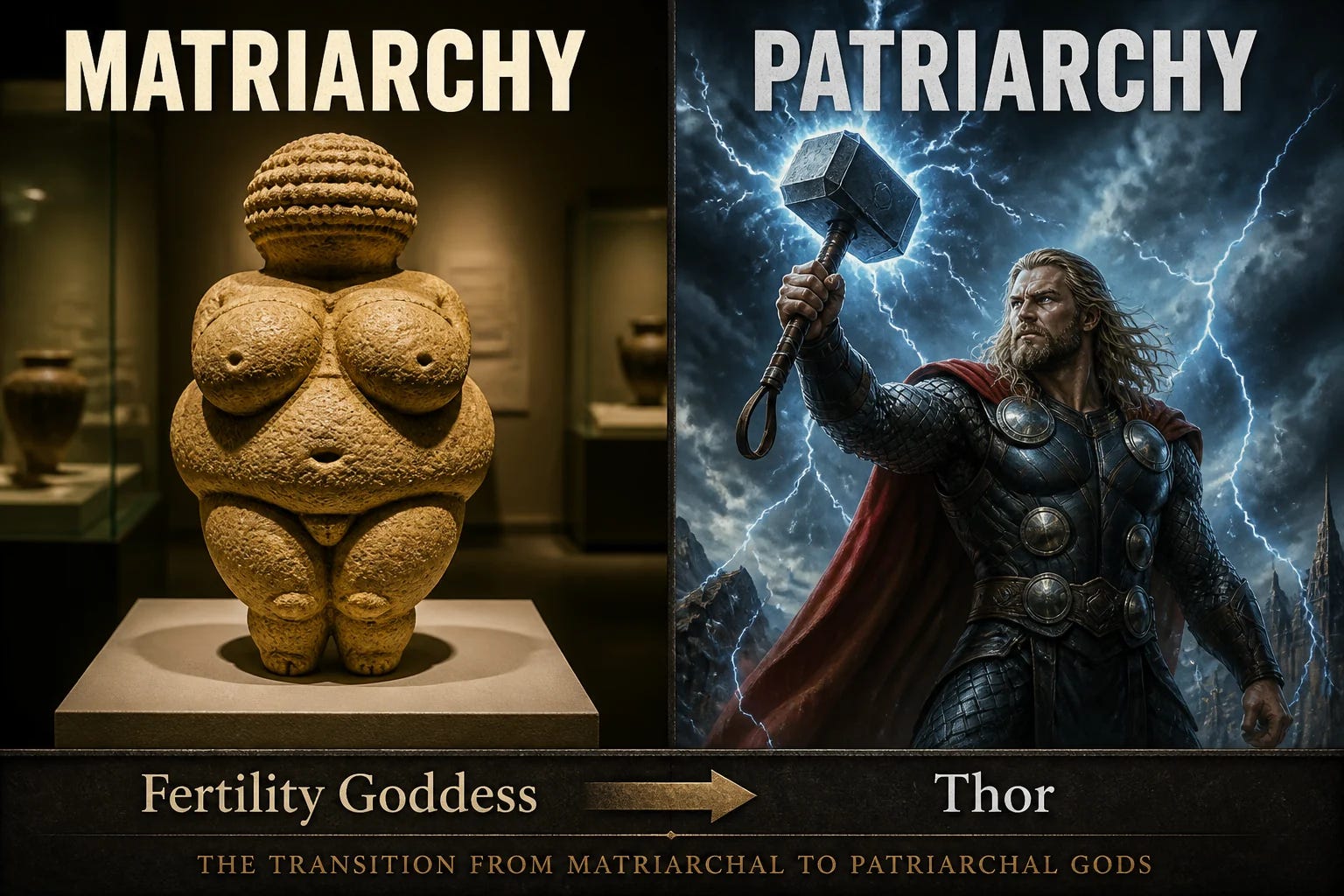
Christianity through its domination of the Roman Empire and Europe, played a massive role in enforcing monogamy. The Church promoted the monogamous family unit because it perfectly aligned with the Roman Empire’s desire to control social order and inheritance, condemning all alternative relationship practices as immoral or heretical.
The clues that the aim of nuclear family as unit of control are in our language. The word family come from the latin familia meaning the slaves of man.
Colonizers Need You to Be Monogamous
This Eurocentric, Christian-dominated model was then violently exported across the globe through colonialism. Colonizers did not merely suggest monogamy to the people they conquered; they literally legislated it. When the Spanish encountered the Indigenous Taíno people of the Caribbean in 1492, they found communal, kinship-based, often matrilineal societies. Taíno families lived in large communal homes called bohíos and slept in large hammocks.

In response, the Spanish enacted the Laws of Burgos in 1512. Law 16 specifically targeted these relationship structures, criminalizing polygamy and divorce, imposing Christian marriage, and even regulating sleeping arrangements by forbidding more than two adults to share a bed.
Colonization wasn’t just about stealing land; it was about reorganizing life at the level of the household, the bed, and the body. Because sex makes life and if you control sex, you control lives.
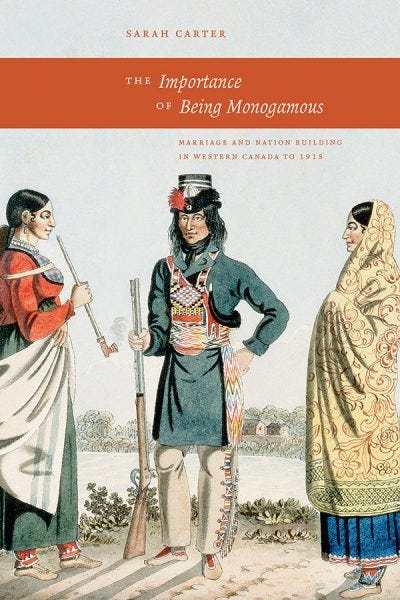
This blueprint of social engineering was replicated everywhere. In Western Canada, as scholar Sarah Carter documents, authorities systematically imposed Christian, lifelong, heterosexual monogamy as a tool of colonial control and nation-building. Indigenous Plains societies had diverse practices, including polygyny and flexible divorce, while Métis communities thrived on fluid custom of the country unions. The Canadian government viewed these practices as barbaric threats to the emerging white, British-Canadian patriarchal order. They used legislation, the withholding of rations, and legal prosecution to force conformity, turning monogamy into a fortress that regulated race and property while severely marginalizing Indigenous women.
The imposition of the nuclear family was also vital to the emergence of capitalism. Monogamous family units served as perfectly isolated units of labor and consumption. The nuclear family became a reliable source of labor for industrialization, facilitating the accumulation of private property and the intergenerational hoarding of wealth that capitalism requires.
For me, unpacking this history is deeply personal. Polyamory is a way of reconnecting with my Kenyan traditions and unlearning the values British colonizers conditioned us to accept. I am of mixed Kenyan, Italian, Asian and Indigenous Mexican ancestry. My Kenyan ethnicities are Kikuyu, Maasai, Dorobo and Kalenjin. Yet mainstream Kenyan society, ruled by a neocolonial elite, taught me to see our Indigenous roots as backward. I was raised to believe that colonization, despite its many evils, had at least liberated us from patriarchy and godlessness.
Reading works like Decolonizing the Mind by the Kikuyu writer Ngũgĩ wa Thiong’o helped me understand compulsory monogamy as a tool of forced European assimilation. It also helped me make sense of what I had witnessed while living in traditional Maasai territory: less-assimilated Maasai communities practising free love often had more harmonious relationships than the Christian monogamous families I encountered, many of which were plagued by infidelity.
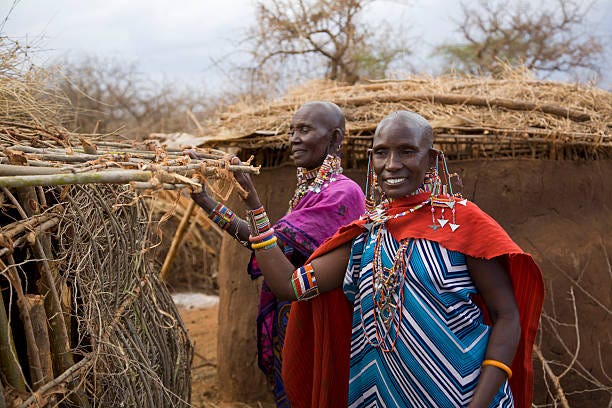
I also learned about the historical checks and balances that safeguarded gender equality and how European patriarchy stripped African women of so much of their power. Millions of Indigenous Africans never fully assimilated and remain guardians of their customs. They can help those misled by colonialism reconnect with healthier ways of relating to one another.
This history is precisely why modern defences of traditional marriage ring so hollow. Recently, a white author published an essay titled Relationships Aren’t Colonized Enough, Actually, arguing that polyamory threatens civilization. The title alone exposes the argument. When someone defends civilization by calling for more colonization, they reveal everything we need to know. Colonization has no redeeming qualities, and none of its legacy deserves celebration or revival.
If a society's stability depends on oppressing women through patriarchal marriage or suppressing the natural diversity of human relationship orientations, then that stability is not worth preserving.
When people get angry at having the colonial roots of these norms exposed, they reveal how deeply they remain invested in colonial domination. They want ownership and control to remain at the heart of our most intimate relationships. But we refuse to be colonized again. We demand complete freedom. Polyamory is not a threat to civilization; the refusal to imagine relationships beyond colonial systems of control is. If decolonizing love threatens the fragile colonial order, let it burn.
We are not built for the scarcity of the colonial fairytale. Humans are diverse, and the only way to cure the profound misery haunting so many modern relationships is to finally allow ourselves to express that diversity freely. When we dismantle the systems of control in our own hearts and homes, we make space for a love that is abundant, fluid, and entirely our own.
Further Reading:
Marriage, a History: How Love Conquered Marriage by Stephanie Coontz
Sex at Dawn: How We Mate, Why We Stray, and What It Means for Modern Relationships by Christopher Ryan and Cacilda Jethá
The Critical Polyamorist blog by Kim TallBear
The Importance of Being Monogamous: Marriage and Nation Building in Western Canada to 1915 by Sarah Carter
Please share this essay with anyone who questions why our relationships are political, or who believes monogamy is the only natural way to love. The more we expose the colonial roots of compulsory monogamy, the more we make space for relationship freedom. Share if you believe love should be liberated, not colonized.
Conference
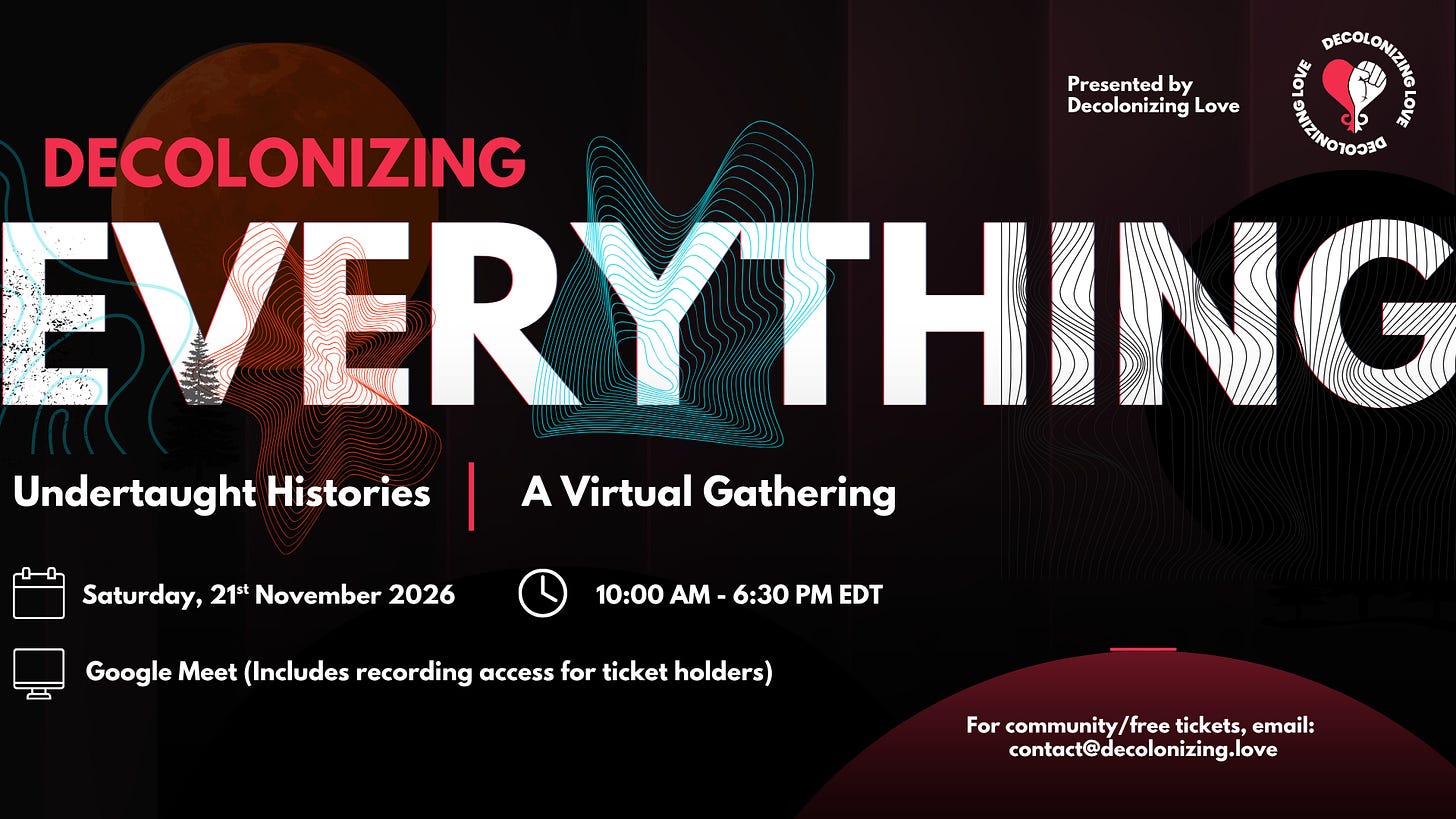
If you want to go deeper into how power shapes our systems, our relationships, and the way we think, join me at Decolonizing Everything: Untaught Histories, an online conference on Saturday, November 21, from 10 AM to 6:30 PM EST.
Colonialism has shaped the systems around you, no matter where you live. This conference makes these conversations accessible, bringing together some of the world’s foremost thinkers on colonialism and decolonization.
What we’ll explore:
What Is Colonization? A historical journey through colonialism, imperialism, and empire.
Next: How to Decolonize: Moving from understanding colonial power to challenging it.
After lunch: Decolonizing Parenting: Rethinking authority, family, and how we raise children.
Decolonizing AI: How colonial power shapes artificial intelligence.
How White People can Decolonize: Even if Indigeneity has been lost to Christianization and assimilation into whiteness, you can uncolonize.
Closing session: What Is Recolonization? How colonial power reinvents itself and why decolonization is never a finished project.
Hear from Joris Lechene on the invisible reach of colonial power in everyday life, Dr. Hilary Agro on uncolonizing white identities and reconnecting with pre-Christian European histories, Professor Lorenzo Veracini on what is colonialism, and Christian Ortiz on decolonizing AI. More speakers will soon be announced.
Bonus: Full Conference Solidarity ticket holders also get an exclusive group debrief with me on November 29.
Reserve your spot here and join us for a day of untaught histories, challenging conversations, and radical possibilities.