
The Neurodivergent’s Guide to Polyamory: Autism, ADHD, BPD, NPD & PTSD

Walk into any polyamory meetup and you’ll notice a lot of us are neurodivergent. That isn’t a coincidence.
Neurodivergence means navigating the world with a brain that thinks, processes, and perceives outside the dominant social norm. Its counterpart, neurotypical, is a more accurate word than normal. It describes what is a statistical standard rather than what is correct. Neurodivergence encompasses ADHD, autism, dyslexia, OCD, bipolar disorder, PTSD and C-PTSD, BPD, and sensory processing differences, among others. Many people are multi-neurodivergent.
Neurodivergent people spend our whole lives discovering that the unwritten rules weren’t written to include us. Social norms don’t make automatic sense to many of us. We tend to question their rationale rather than blindly follow them. Once you’ve been questioning how you’re supposed to make eye contact, hold a job, sit in a classroom, and talk at a party, questioning how you’re supposed to love is the logical next process.
Polyamory has unique advantages for neurodivergent people.
Being intentional rather than implicit about how to navigate a relationship.
Compulsory monogamy runs on a set of social expectations that people are simply assumed to understand. You are not always asked to define what commitment means, how much time you owe each other, what kinds of contact with other people are acceptable, or what happens when circumstances change.
Polyamory, when done well, requires much more intentional communication. You have to actually say what you are agreeing to, how much time you have, what kinds of contact feel right, what your core needs are, and what happens when an agreement needs to change.
For anyone who struggles with unspoken social rules, that explicitness can be a huge relief. You are not expected to magically and telepathically know what everyone means. You can actually talk about it, define it together, and adjust it as needed. Custom made instead of off the rack. You get to design each relationship around the real routines, sensory needs, and energy limits of the people in it, instead of squeezing into one standard shape.
But there is also the downside of polyamorous relationships with neurodivergent partners.
Without support tools being poly and neurodivergent can result in issues.
More partners means more scheduling, more transitions, more emotional processing, more conversations, and more chances for rejection sensitivity to flare.
I have complex post-traumatic stress disorder (CPTSD), and suspect I’m autistic, though I’m not formally diagnosed with the latter. Both mean I am very sensitive to changes, and being caught off guard is deeply destabilizing. Learning to communicate this to partners in a way that helps them understand how important it is was a hard-won lesson.
For a nervous system shaped by C-PTSD and autism, any unexpected shift feels like the ground giving way. Before the conscious mind can evaluate whether the threat is real or minor, the lizard brain’s survival mechanism has already mobilized and is bracing for impact to protect itself.
I’ve had multiple partners who were rather impulsive; for example, randomly showing up at my house while I was working because they wanted to party. My anchor partner of 16 years actually has ADHD.
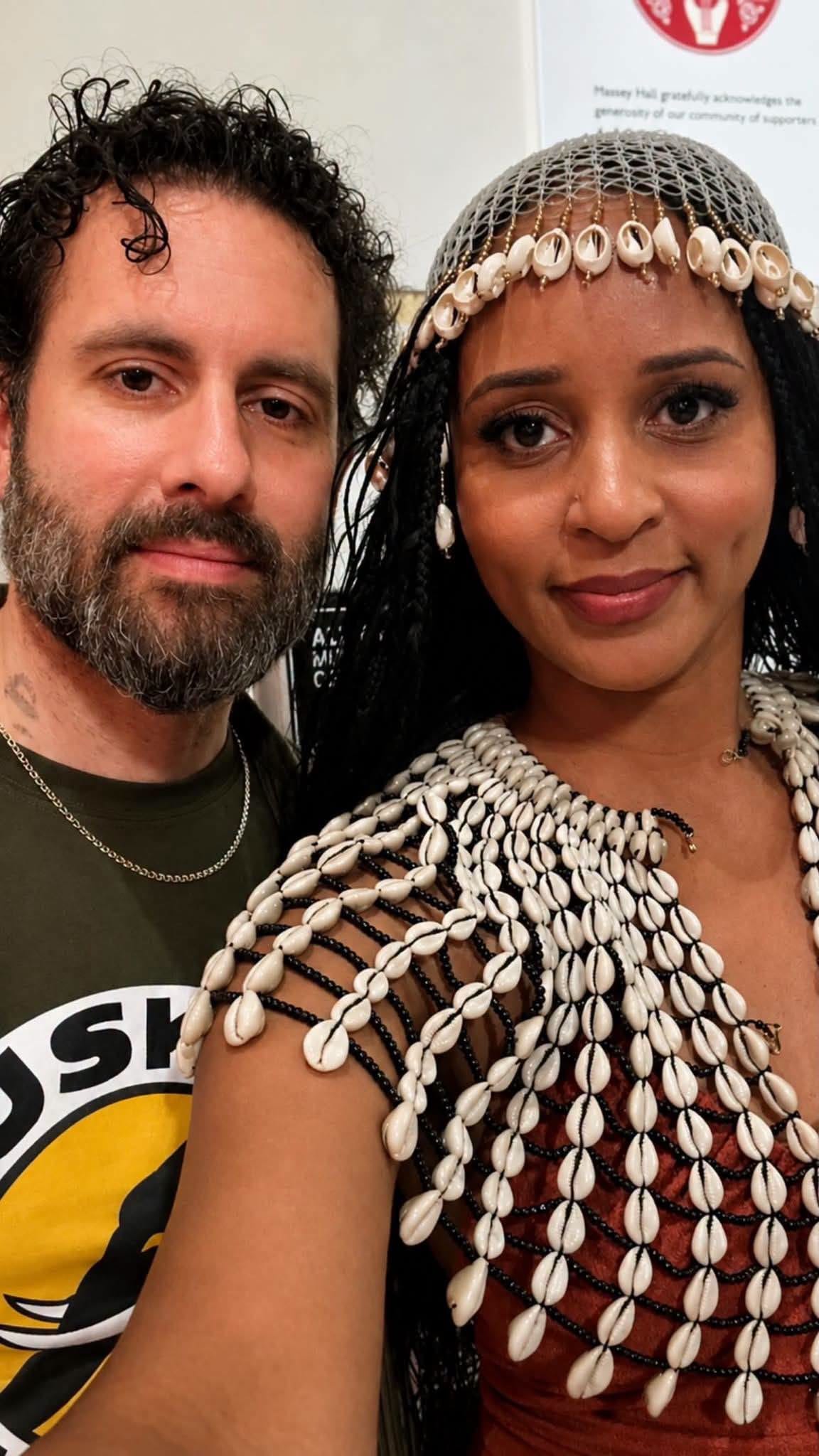
Early on in our relationship he would often change our schedules because a spontaneous idea came up with another partner. That created a lot of stress for me. I literally left one past partner because he was too chaotically unpredictable. I can only date people who respect schedules and agreements, and if they want to make a change, we need to agree long before; they can’t just do something and ask for forgiveness later.
My partner Nick’s ADHD actually makes him remarkably adept at navigating multiple relationships; last year, he comfortably managed four at the same time. While I couldn’t handle four partners in the same locale, his brain style handles that variety with grace.
Neurodivergence can be a superpower in polyamory.
Together, we’ve coached clients who are autistic, ADHD, AuDHD, or living with PTSD, BPD, NPD, and other forms of deep trauma adjustment.
In this essay, I’m focusing on the five we see most frequently: autism, ADHD, PTSD, BPD and NPD.
This essay is written for two groups:
Neurodivergent people practicing non-monogamy.
And the partners and metamours who love them.
Read on for practical, specific strategies for navigating the intersection of neurodivergence and polyamory, along with resources and recommended reading to help you build a stronger support system.